Why Tungsten Carbide? The Material Behind TILER Professional Tile Cutting Wheels
1. What Is Tungsten Carbide
Tungsten carbide (chemical formula: WC) is a compound composed of equal parts tungsten and carbon atoms. In industrial applications, it almost never appears in its pure form. Instead, tungsten carbide powder is mixed with a metallic binder—typically cobalt, though nickel or iron are also used—and formed through powder metallurgy, sintered at temperatures between 1,400°C and 1,600°C. This composite material is known as Cemented Carbide.
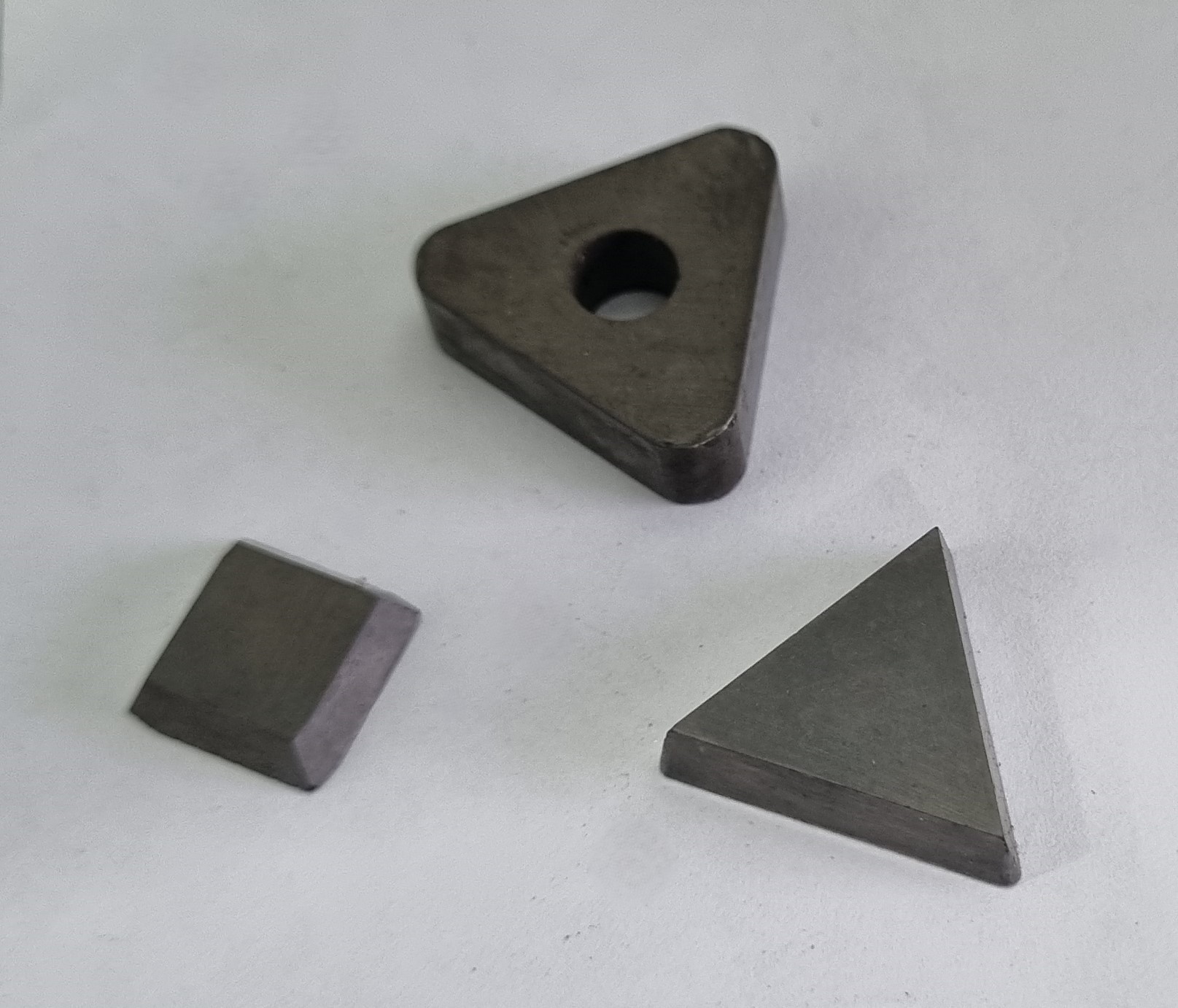
According to data from Wikipedia, tungsten carbide exhibits several critical physical properties:
| Property | Value |
|---|---|
| Hardness | Mohs 9.0–9.5, Vickers ≈2600 |
| Stiffness | 530–700 GPa — 3× steel |
| Density | 15.6 g/cm³ — 2× steel |
| Melting Point | 2,785–2,830°C |
| Thermal Conductivity | 110 W/(m·K) |
These three figures—diamond-like hardness, three times the stiffness of steel, and twice the density of steel—are precisely why tungsten carbide has become the material of choice for professional tile cutter wheels.
2. Why Tungsten Carbide Is Ideal for Tile Cutter Wheels
First: Superior Hardness Means the Edge Lasts Longer
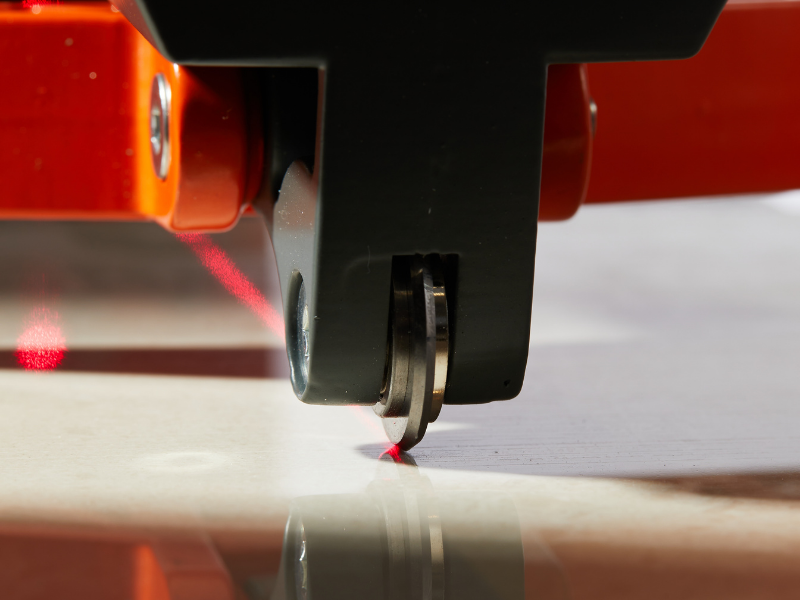
Modern porcelain and fully vitrified tiles have extremely hard surfaces. A standard carbon steel wheel loses its sharpness after just a few passes, causing the wheel to skid rather than score. Tungsten carbide, with a Vickers hardness of approximately 2600, can continuously produce a clean, even score on hard tile surfaces—maintaining its edge far longer than steel.
Second: High Stiffness Means Minimal Deformation
During cutting, downward pressure concentrates on the cutting edge. If the wheel material lacks stiffness, it deforms slightly under pressure, resulting in uneven scoring depth and poor straightness. Tungsten carbide's stiffness is three times that of steel, so deformation is minimal even under the same pressure—delivering more consistent cut quality.
Third: Excellent Heat Resistance Stabilizes Performance
High-speed scoring generates friction heat. Tungsten carbide has a melting point exceeding 2,780°C and strong thermal conductivity (110 W/(m·K)), allowing heat to dissipate quickly. This prevents localized softening or performance degradation during extended use.
3. How to Identify High-Quality Tungsten Carbide Wheels
Not all tungsten carbide wheels are created equal. Here are four practical criteria:
4. TILER's Tungsten Carbide Wheels
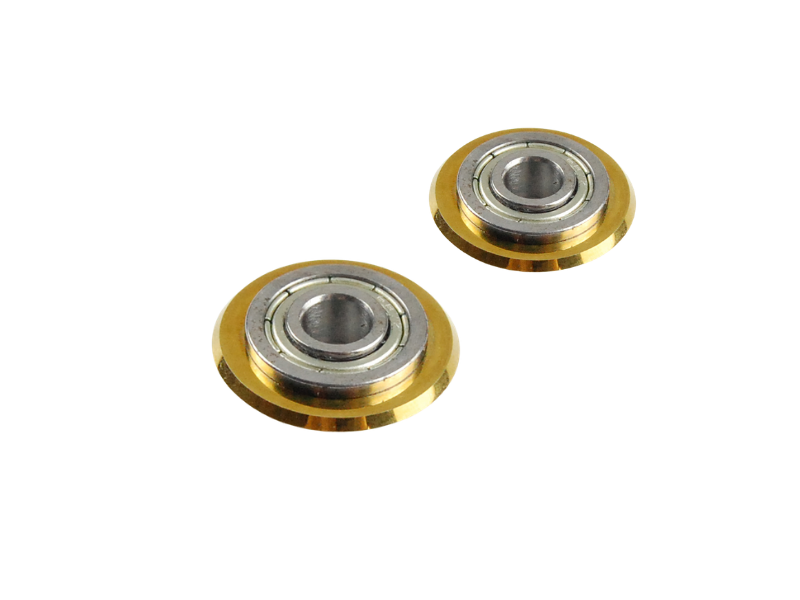
On the Titanium Coating (T Models)
A titanium-based coating—typically titanium nitride (TiN)—deposits a thin, ultra-hard film over the wheel surface. This further improves wear resistance and reduces friction coefficient, resulting in smoother scoring and extended wheel life. For high-intensity, continuous cutting operations, the T-coated model is the superior choice.
On the 22 mm Outer Diameter
A larger outer diameter means a longer contact arc between the wheel and the tile surface, enabling a smoother, more continuous score line with each pass. This is one of the key engineering considerations behind TILER's specification choice.
5. The Cutting Experience Upgrade: Ball Bearings
The wheel material determines whether the edge is hard enough. But the wheel's rotation mechanism determines whether it spins smoothly. These are two entirely separate dimensions of cutting performance.
- Metal-to-metal sliding friction
- High downward force required
- Inconsistent rotation, uneven scores
- Axle wears rapidly
- Harsh and loud noise
- Short service life
- Rolling friction via multiple small ball bearings
- Minimal downward force needed
- Consistent rotation, even scores
- No axle wear—load shared by balls
- Quiet operation
- Long service life
In short: ball bearings let the wheel "spin freely on its own." The operator no longer needs brute force—the score is naturally more even, straightness is more consistent, and extended use causes far less fatigue.
6. Buying Guide
By Tile Type
| Tile Type | Recommended Wheel | Reason |
|---|---|---|
| Standard glazed wall tiles | Carbon steel acceptable | Lower hardness requirement |
| Porcelain / Fully Vitrified | Tungsten carbide required | Steel dulls quickly on hard surfaces |
| Natural stone | WC + Titanium coating | Maximum wear resistance |
By Usage Frequency
7. Closing
Tungsten carbide is not merely an expensive material—it is a material that makes every cut trustworthy. Paired with ball bearing rotation, TILER's cutting system integrates material hardness with rotational smoothness into one unified solution. This is the technical foundation behind 30 years of TILER serving professional tilers across more than 140 countries.
It is about cutting accurately, and cutting that lasts.