The Complete Guide to Tile Grouting, Cleaning & Renovation Tools: TILER Full-Scenario Solutions
Core Section: TILER Professional Tool Solutions for Two Primary Scenarios
Empowering professional workflows from new installation to old grout renewal
Scenario 1: The Complete Grouting & Cleaning Workflow for New Tile Installation
Systematic approach for flawless finish on new tile projects
Efficient Grout Application
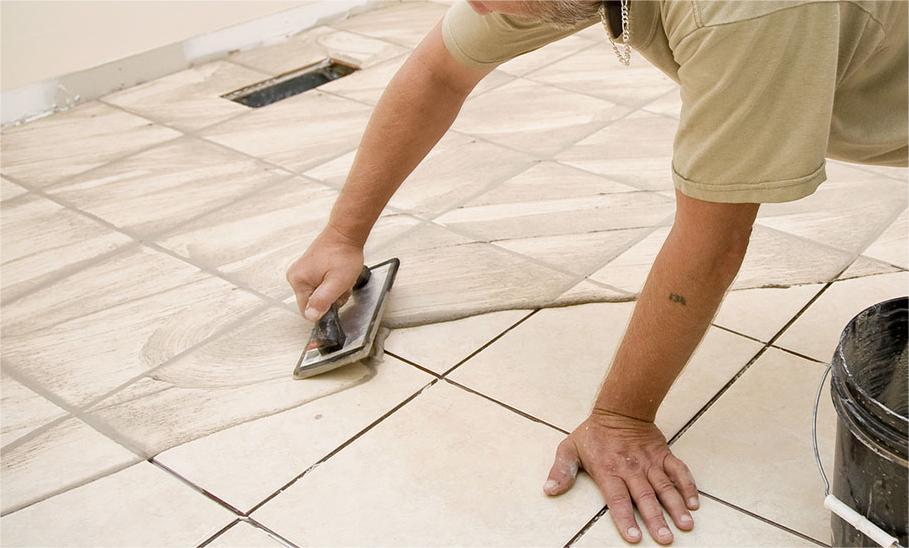
Core Tool: TILER Professional Grout Float Series
Function Depth Analysis: This is the heart of evenly pressing and smoothing grout into the joints. TILER offers multiple specialized options to match your specific project requirements:
- High-flexibility rubber floats for solid compaction
- Softer EVA floats prevent scratches on sensitive or high-gloss tiles
- 300mm large float for efficient floor work
- 180mm and smaller sizes for walls, corners, and detailed areas
- Non-slip handles (wooden or dual-color soft grip)
- Reduces hand fatigue during prolonged use
- Enables precise pressure application
Select rubber floats for standard ceramic/porcelain tiles and EVA floats for natural stone or polished surfaces to prevent costly damage to delicate materials.
Initial & Precision Cleaning
Core Tools: TILER High-Efficiency Grout Sponges & Professional Grout Brush Set
The Power Combo Workflow:
Grout Brush Set Technical Specifications:
Systematic Approach: This combination systematically tackles cleaning for joints from 1mm to over 10mm, creating clean, smooth, professionally finished lines. The variety ensures you have the right tool for every joint width and tile material encountered on the job site.
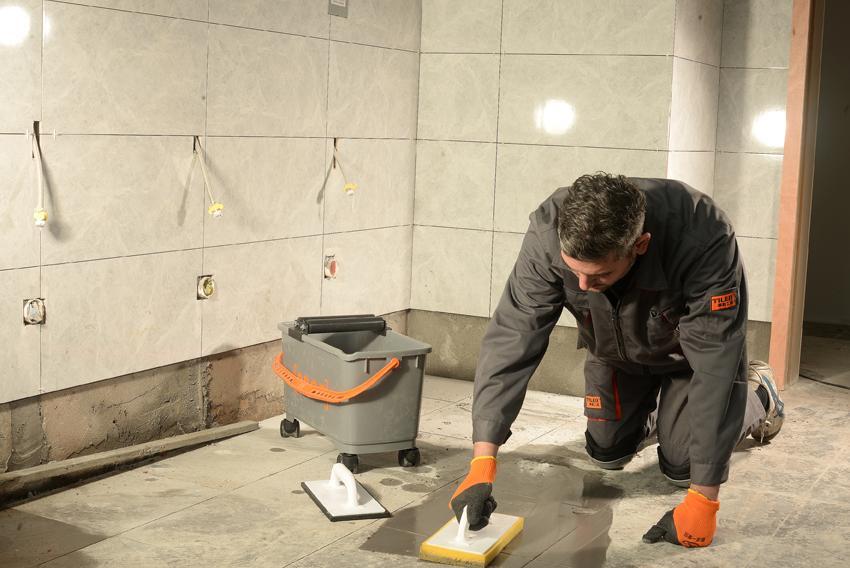
Professional-Grade Cleaning & Finishing System
Wheeled Cleaning Bucket Kit
The Professional Team's "Efficiency Engine": For large-area projects, this integrated system revolutionizes workflow continuity and jobsite organization.
Detail Grout Knife
Precision Mastery Tool: The essential instrument for achieving the "final one percent" of perfection in tile installation.
Primary Applications:
- Precisely handling inside and outside corners where brushes cannot reach effectively
- Removing stubborn, localized spots of cured grout or adhesive
- Cleaning grout from tight spaces around fixtures, outlets, and edges
- Scoring and removing old caulk or sealant during renovation work
Scenario 2: Professional Process for Old Tile Joint Renovation & Repair
Systematic restoration solution for aging, damaged, or deteriorated tile joints
Addressing the Critical Pain Point
The Universal Challenge: How to efficiently and safely renovate blackened, moldy, cracked, or deteriorating sealant in old bathrooms, kitchens, and commercial spaces without damaging the original tiles or creating additional repair work?
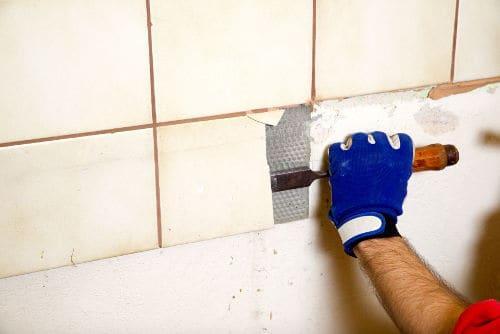
The Professional Solution: TILER Sealant/Caulking Removal Tool Kit
Engineered specifically for safe, efficient removal of old silicone, sealant, and grout
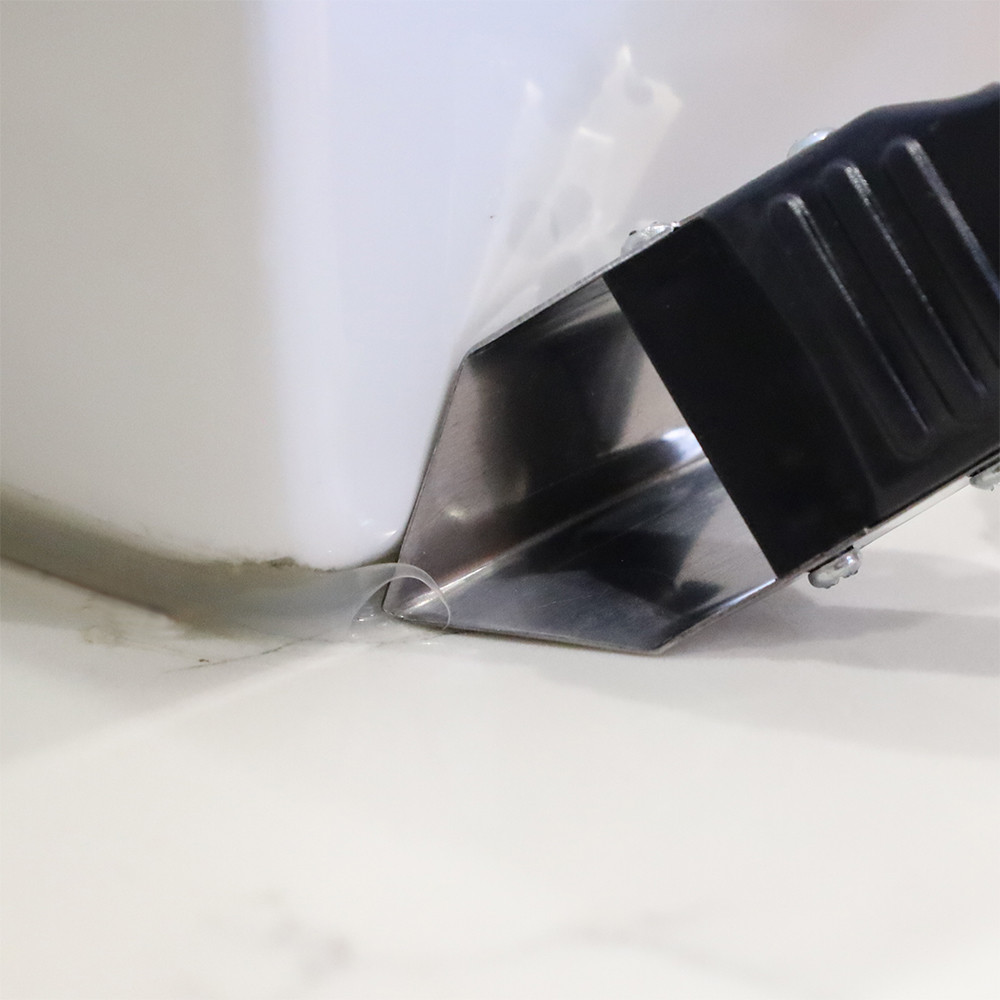
Professional Demolition Technology
Surgical Precision Engineering: This kit is specifically engineered for the safe removal of old silicone, sealant, and grout. Its variety of high-hardness alloy blades act like surgical tools, each designed for precise application in different removal scenarios.
To maximize removal efficiency while minimizing the risk of damage to the underlying tile glaze, creating a perfect, clean substrate ready for professional re-grouting or re-sealing.
Safety & Surface Protection Features
Blade design prevents digging too deep into the substrate, protecting the tile edge integrity.
Rounded tips on certain blades prevent scratching adjacent tile surfaces during removal.
Comfortable handles provide better control, reducing slip-related accidents.
Standardized Renovation Workflow
A systematic, four-step process for guaranteed renovation success
Complete Old Joint Removal
Using TILER Removal Kit to safely extract all old silicone, sealant, and grout without damaging tiles.
Deep Substrate Cleaning
Thorough cleaning with TILER Cleaning Bucket & Brushes to prepare a perfect surface for new application.
Re-Grouting Application
Professional application of new grout using TILER Grout Floats & Sponges for perfect finish.
Seal & Cure
Proper sealing and curing for long-lasting, waterproof, and mold-resistant finished joints.
The TILER Quality Standard for Renovation Work
Post-Removal Inspection Criteria
After using the TILER Removal Kit, the joint should meet these exacting standards before proceeding to re-grouting:
Joint should reveal the tile's original side material, free of any old adhesive residue or contamination.
Surface must be completely dry, solid, and free from grease, oil, or moisture that could affect new grout adhesion.
A final pass with a clean TILER brush to remove all dust and debris serves as the quality verification before new application.
Why This Standard Matters
Adhesion Integrity: Proper surface preparation ensures new grout bonds correctly, preventing premature failure and callbacks.
This inspection protocol separates amateur work from professional-grade renovation, ensuring results that last for years, not months.
Large-Format Tile Floor Challenge
Grouting expansive floors (750x1500mm and larger) while maintaining quality and avoiding physical strain
The Problem Statement
Physical Demands: Traditional grouting methods on large-format tiles require constant bending, kneeling, and reaching across wide areas, leading to:
- Back and knee fatigue from prolonged awkward postures
- Inconsistent pressure application due to physical exhaustion
- Extended project timelines as workers need frequent breaks
- Quality inconsistencies across different sections of the floor
Standard short-handled floats and stationary buckets force inefficient movement patterns and frequent repositioning.
The TILER Power Move
This combination creates an in-situ production line that eliminates unnecessary walking and repositioning.
Position the wheeled bucket centrally, work in circular patterns outward, maintaining clean water access and efficient waste disposal throughout the process.
Workflow Visualization for Large-Format Tiles
Epoxy Grout Haze on Textured Tiles
Removing stubborn epoxy residue from porous or textured surfaces without damage
The Epoxy Challenge
Material Characteristics: Epoxy grout's superior durability and chemical resistance also make it notoriously difficult to clean once cured on textured surfaces like:
- Using metal scrapers that scratch the tile surface
- Applying harsh chemicals that discolor natural stone
- Excessive water that spreads the haze further into pores
Epoxy haze becomes significantly harder to remove after 24 hours of curing time, making immediate action crucial.
Two-Stage Cleaning Protocol
Technique: Perform an immediate clean with a damp (not wet) TILER sponge within 20-30 minutes of epoxy application.
Technique: Use the stiff, short-bristle brush from the TILER Grout Brush Set for targeted spot-cleaning.
Brush Selection Criteria for Epoxy
Proper Technique Demonstration
Correct brush application makes the difference between clean tiles and damaged surfaces
Correct Method
- Apply firm, vertical pressure directly on the haze spot
- Use short, controlled strokes (2-3cm)
- Work from edges toward center of stain
- Regularly rinse brush to prevent epoxy redeposition
Incorrect Method
- Long, sweeping strokes that spread the residue
- Using metal tools that scratch the surface
- Excessive water that drives epoxy deeper
- Angled brushing that misses pore contamination
好的,现在继续生成**第四部分:系统理念与行动号召**的HTML代码。这部分将包含品牌哲学、工具维护和最终的转化内容:```html
Caring for Professional Tools
Investment Protection: Your TILER tools represent both a financial investment and a critical component of your professional capability. Proper maintenance ensures they deliver peak performance throughout their service life and protect your ROI.
Immediate Post-Use Cleaning
Clean all tools promptly after each use to prevent grout, adhesive, or sealant from curing on surfaces. Use warm water and mild detergent, avoiding harsh chemicals that could degrade materials.
Blade Preservation
Oil Removal Kit blades to prevent rust. Wipe blades of the Sealant Removal Kit clean after use and apply a light machine oil or specialized tool oil to protect against corrosion, especially in humid environments.
Cleaning Bucket Care
Rinse and dry the Cleaning Bucket Kit thoroughly. Empty all water compartments, remove and clean the grate, and allow all components to air dry completely before storage to prevent bacterial growth and odor.
Storage Best Practices
Store tools in dry, organized conditions. Avoid direct sunlight or extreme temperatures that could degrade rubber, plastic, or handle materials. Use original cases or organized tool bags when available.
Pro Maintenance Insight
Regular inspection is as important as cleaning. Periodically check handles for cracks, blades for dullness or damage, and rubber components for signs of drying or cracking. Early detection of wear allows for timely replacement before tool failure occurs on the jobsite.
The TILER Ecosystem Philosophy
"We provide interlinked 'workflow modules,' not isolated products."
Integrated Workflow Design
TILER tools are engineered to work in concert, not competition. From the demolition phase of renovation (Removal Kit) to the precision application and cleaning of new installations (Floats, Brushes), and the mobile efficiency systems (Cleaning Bucket), each component is designed as part of a holistic solution.
System Advantages
The TILER Quality Standard
Joints Clean and Smooth
No visible residue, haze, or irregular texture. Uniform appearance across entire installation with crisp, defined edges.
No Residue or Haze
Tile surfaces completely free of grout film, epoxy haze, or cleaning marks under any lighting condition or viewing angle.
Substrate Dry and Solid
Prepared surfaces completely moisture-free with proper adhesion characteristics for optimal grout or sealant performance.